One Motoring VEP

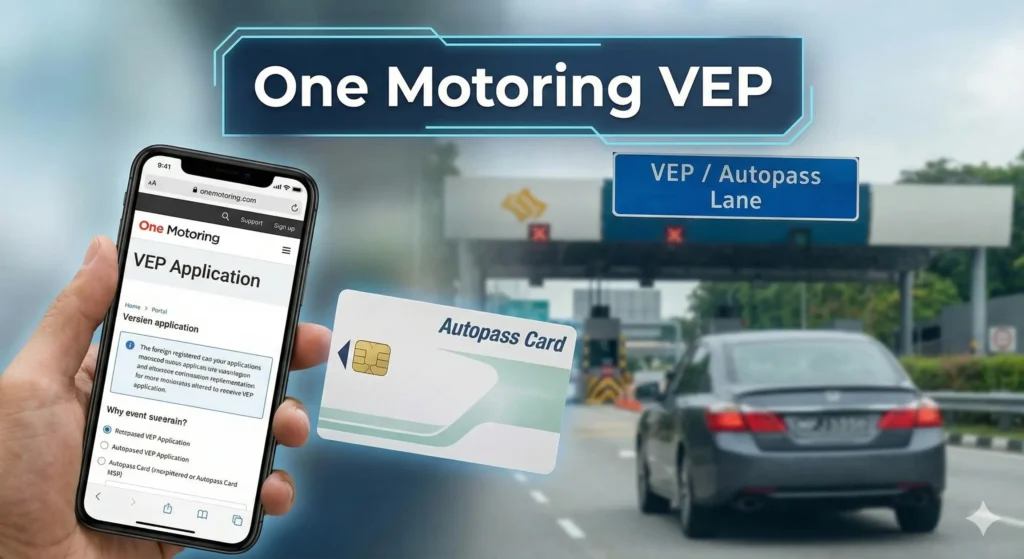
In recent years, Singapore has made significant strides in managing its road traffic to enhance both safety and efficiency. A cornerstone of this effort is the Vehicle Entry Permit (VEP) system, administered through the One Motoring portal.
This system is essential for regulating the entry of foreign registered vehicles into Singapore, ensuring that road use is optimized and compliant with local regulations.
Let’s delve into the specifics of the VEP system and its implications for drivers and the broader Singaporean community.
Understanding the Vehicle Entry Permit (VEP)
The Vehicle Entry Permit (VEP) is a crucial regulatory measure implemented by the Land Transport Authority (LTA) of Singapore. It applies primarily to foreign-registered vehicles entering the country.
The primary goal of the VEP is to control the influx of foreign vehicles, thereby managing traffic congestion, reducing road wear, and promoting environmental sustainability.
Key Features of the VEP System
- Application Process:
- Pre-Arrival Requirements: Foreign vehicles must apply for a VEP before entering Singapore. This is done through the One Motoring portal, which provides a streamlined interface for drivers.
- Documentation: Applicants must provide necessary documents, including vehicle registration details, valid insurance certificates, and personal identification.
- Permit Validity and Fees:
- Duration: The VEP is valid for a specified period and must be renewed upon expiry. Short-term visitors typically receive a permit valid for 14 days.
- Charges: Fees are applied based on the duration of the stay. The first 10 days per calendar year are often free, while subsequent days incur a daily charge. This structure incentivizes short-term visits while discouraging long-term parking of foreign vehicles.
- VEP Exemptions:
- Certain vehicles, such as those used for medical services or by visiting dignitaries, may be exempted. Detailed criteria are available on the One Motoring portal.
Read More: When Should You Renew Road Tax in Malaysia
Applying for VEP / Autopass Card (Car and Motorcycle)
To bring a Malaysia-registered vehicle into Singapore, you must strictly adhere to the following requirements.
Essential Requirements
To apply, ensure you have the following documents ready:
- Valid Road Tax: Your vehicle’s road tax must be current.
- Valid Vehicle Insurance: Must cover third-party injury and death.
- Autopass Card: A mandatory stored-value card for fee payment.
- LTA’s Approval Email: Proof of your VEP application approval.
Note: If you do not have an Autopass Card, you must apply for one. If you already possess one, ensure you update your VEP details whenever you renew your road tax or insurance.
Eligibility Criteria
You cannot keep or use a foreign-registered vehicle in Singapore if you fall into one of these categories:
- Singapore Citizen
- Singapore Permanent Resident (PR)
- Resident of Singapore
- Long-Term Visit Pass or Dependant’s Pass holder
- Student’s Pass holder
- Training Employment Pass or Work Holiday Pass holder
- Work Pass holder residing in Singapore
Exception: A Work Pass holder not residing in Singapore may use a foreign-registered vehicle if they meet specific conditions (see below).
Digital Services Available
- Apply for VEP/Autopass Card
- Update vehicle’s road tax/insurance validity
- Check application status
- Check outstanding LTA fines
- Calculate VEP fees and toll charges
Bringing a Malaysia-Registered Vehicle In and Out
Before Entering Singapore
Ensure you possess a valid Autopass Card, valid road tax, and insurance (with third-party coverage). You must also have the LTA approval email and no outstanding fines.
Special Rules for Work Pass Holders: If you are a Work Pass holder not residing in Singapore, you must:
- Be the registered owner of the vehicle.
- Reside outside Singapore.
- Use the vehicle outside Singapore for at least 6 hours daily.
- Possess a valid Autopass Card.
Thailand-Registered Vehicles: These vehicles must have Singapore insurance issued by a Singapore-based insurance company.
When Entering Singapore
- Insert your Autopass Card into the reader at the immigration checkpoint to validate your entry.
When Driving in Singapore
- ERP Charges: You are required to pay Electronic Road Pricing (ERP) charges when passing through operational ERP gantries. Ensure your Autopass Card or an In-Vehicle Unit (IU) is used for payment.
When Exiting Singapore
- Insert your Autopass Card at the checkpoint to pay all exit fees.
- Important: There are no top-up machines at the checkpoints. You must ensure your card has sufficient funds before reaching the checkpoint. Top up at convenience stores or ATMs within Singapore.
Fees and Charges
It is vital to budget for the following costs when driving a foreign vehicle in Singapore.
Cars
- Checkpoint Tolls:
- Woodlands: Entry $0.80 / Exit $2.10
- Tuas: Entry $2.10 / Exit $2.10
- VEP Fees: Waived for the first 10 days per calendar year. Afterward, $35/day.
- Reciprocal Road Charge (RRC): $6.40 per entry.
- ERP Charges: $5.00/day fixed rate if the vehicle is not installed with an IU (In-Vehicle Unit).
Motorcycles
- VEP Fees: Waived for the first 10 days per calendar year. Afterward, $4/day.
Fee Exemptions
VEP fees are not charged during the following times:
- Saturdays, Sundays, and Singapore public holidays.
- Entry between 5:00 PM and exit by 2:00 AM the next day.
- June & December School Holidays: Entry from 12:00 Noon and exit by 2:00 AM the next day.
Tip: Use the fee calculator on the One Motoring portal to estimate your total cost before your trip.
Penalties for Non-Compliance
Strict enforcement is in place regarding the VEP and Autopass system.
- Expired VEP: Social Visit Pass holders can extend their 14-day VEP up to 5 days before expiry. Failure to renew can result in vehicle seizure.
- Work Pass Violations: Non-compliance can lead to fines of up to $1,000 or 3 months imprisonment for the first offense, with heavier penalties for repeat offenders.
- Outstanding Fines: All fines must be paid before leaving the country. You can check for fines online via the AXS website.
Benefits of the VEP System
The VEP system is not just a regulatory hurdle; it offers significant benefits to Singapore’s infrastructure:
- Traffic Management: By regulating foreign vehicle numbers, VEP helps alleviate congestion during peak hours, ensuring smoother traffic flow.
- Road Maintenance: Revenue from VEP fees is reinvested into infrastructure improvements, ensuring high-quality road conditions.
- Environmental Impact: Controlling vehicle influx reduces emissions, aligning with Singapore’s green goals.
- Enhanced Security: The system maintains a detailed record of vehicles entering the country, allowing authorities to monitor security effectively.
Navigating the One Motoring Portal
The One Motoring portal is the central hub for all VEP-related services.
- User-Friendly Interface: Intuitive design with clear instructions ensures even first-time users can navigate applications easily.
- Real-Time Updates: Applicants can track the status of their VEP application in real-time.
- Support: The portal offers FAQs, tutorials, and customer service contacts to resolve any issues promptly.
Conclusion
The Vehicle Entry Permit system, managed seamlessly through the One Motoring portal, demonstrates Singapore’s commitment to safe, efficient, and sustainable road management.
By understanding the requirements—from application to fee payment—drivers can ensure a smooth and lawful entry into Singapore. As transportation policies evolve, staying informed through the One Motoring portal remains the best way to enjoy a hassle-free driving experience in the Lion City.